


If you have spent months, maybe years, trying face washes, home remedies and every “miracle” serum on your feed, only to be left with painful breakouts and marks that refuse to fade, you are not alone. Severe acne is more than a cosmetic problem. It affects confidence, sleep, relationships and even how you show up at work. The good news is that it is very treatable, and the right expert makes all the difference. That is why so many people search for the best dermatologist in Delhi when over-the-counter products stop working.
At Rakshaa Aesthetics, we see this every day. Here is how dermatologists approach severe acne and deep scars, and what you can realistically expect.
Why Severe Acne Needs a Dermatologist, Not Guesswork
Mild acne often settles with a good routine. Severe acne is different. Think deep, painful cysts and nodules, breakouts along the jawline and back, and lesions that leave marks behind. These form deep under the skin, where cleansers and spot treatments simply cannot reach.
Leaving it untreated is the biggest risk. Every inflamed cyst that heals on its own is a chance for a permanent scar. Early, proper treatment protects your skin for the long run.
Step 1: A Proper Diagnosis
The best dermatologist in Delhi will never hand you a standard prescription after a two-minute glance. A good consultation looks at:
- Your acne type and severity (comedonal, inflammatory, cystic)
- Skin type and sensitivity
- Hormonal triggers, especially in women (irregular periods, PCOS, sudden adult breakouts)
- Diet, stress, sleep, and skincare or cosmetic habits
- Past treatments that did or did not work
This is also the point where scars are assessed, because the treatment plan for active acne and for scarring should be planned together.
Step 2: Controlling Active Acne First
Scars cannot be treated well while new breakouts keep appearing. So, the first goal is to calm the skin down. Depending on your case, dermatologists may use:
- Topical retinoids and medicated creams to unclog pores and reduce inflammation
- Oral antibiotics for a limited period to settle severe inflammation
- Hormonal therapy, such as anti-androgen medication, for hormone-driven acne in suitable patients
- Isotretinoin, a powerful treatment for severe or stubborn cystic acne, always under close medical supervision with regular check-ups
- Chemical peels (salicylic or mandelic acid) to clear congestion and improve texture
These are prescription-level treatments, so please do not self-medicate. Dosage, duration and monitoring matter a great deal.
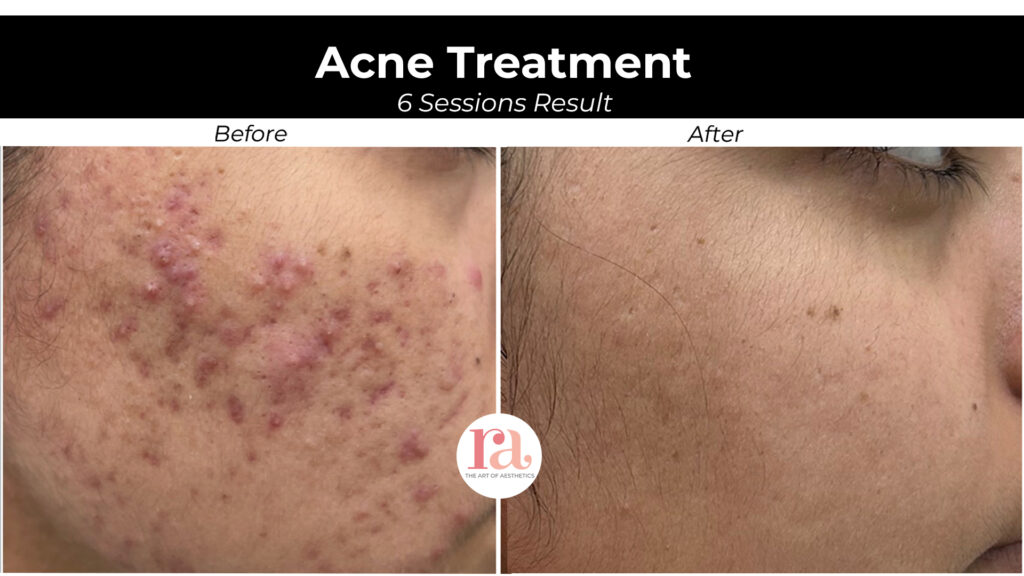
Step 3: Treating Deep Acne Scars
Once acne is under control, the focus shifts to scars. Not all scars are the same, and this is where expertise really shows. Common types include:
- Icepick scars: narrow, deep pits
- Boxcar scars: wider, sharply edged depressions
- Rolling scars: gentle, wave-like dips caused by tissue pulling beneath the skin
- Hypertrophic or keloid scars: raised, thick scars
- Post-inflammatory marks: flat dark or red patches, which are not true scars but often get lumped in
Because each type responds to a different approach, dermatologists usually combine treatments for the best result.
Popular scar treatments
- Microneedling and radiofrequency microneedling: stimulates collagen to gradually lift shallow to moderate scars
- Fractional laser resurfacing: targets deeper texture issues and uneven skin
- Subcision: a minor procedure that releases the fibrous bands tethering rolling scars
- TCA CROSS: a targeted technique often used for icepick scars
- Chemical peels: help with pigmentation and surface roughness
- PRP (platelet-rich plasma): supports healing and collagen renewal when combined with other procedures
- Dermal fillers: sometimes used for select depressed scars
Most people need a series of sessions spaced a few weeks apart, since collagen rebuilds slowly. Results build over months rather than days.
Step 4: A Skincare Routine That Supports Healing
Procedures work best when your daily routine backs them up. A dermatologist will usually recommend a gentle cleanser, a suitable moisturiser, and above all a broad-spectrum sunscreen. Sun exposure darkens marks and slows recovery, and this is especially important in India’s strong sunlight. Picking or squeezing pimples is the other habit to drop, as it pushes inflammation deeper and raises scarring risk.
What Makes the Best Dermatologist in Delhi?
With so many clinics around, how do you choose? Look for these signs:
- Qualified, experienced doctors who specialise in acne and scar management
- Personalised plans, not one-size-fits-all packages
- Honest expectations. Nobody can promise 100% scar removal, and a good doctor will tell you that
- Modern, safe technology used in a hygienic setting
- Clear follow-up and aftercare
- Skin-of-colour expertise. Indian skin is more prone to pigmentation, so settings and techniques must be chosen carefully
At Rakshaa Aesthetics, our approach is built around these principles: understand the cause, treat the acne, then rebuild the skin, with a plan that fits your skin, your schedule and your goals.
How Long Does Treatment Take?
Patience is part of the process. Active acne often improves within weeks to a few months, depending on the treatment. Scar revision typically takes several sessions across three to six months or longer.
Final Thoughts
Severe acne and deep scars are not something you have to live with, and they are not a reflection of how well you look after your skin. With an accurate diagnosis, the right medical treatment and carefully chosen scar procedures, real improvement is possible.
If you are searching for the best dermatologist in Delhi, start with a consultation where someone actually listens, examines your skin and explains your options clearly. Book a consultation with Rakshaa Aesthetics today and take the first step toward clearer, smoother, more confident skin.